

Boondi Laddu Recipe – How to make Boondi Ladoo – Diwali Recipes – Boondi Laddu Recipe Video – Deepavali Laddu Recipes – Sweet Boondi Laddu – Tamil Nadu Boondi Laddu Recipe – How to make Boondi Laddu at Home – Traditional Boondi Laddu Recipe – Easy Laddu Recipes – Deepavali Sweets – Madras Laddu Recipe – Authentic Boondi Laddu – Traditional Boondi Laddu Recipe – Easy Ladoo Recipes #boondiladdu #boondiladoorecipe #laddurecipe #diwalisweets

Boondi Laddu - How to make Boondi Ladoo
Ingredients
For Boondi
- 1.5 cup Gram Flour / Chickpea Flour / Kadalai Maavu / Besan
- 1/2 tsp Rice Flour
- 1/8 tsp Baking Soda
- 1/8 tsp Orange Food Color optional
- 3/4 cup Water
- 1/4 cup Water (approx) additional to adjust consistency, may drink more or a little less
- 4 cups Oil for frying
For Sugar Syrup
- 1.5 cup Sugar
- 3/4 cup Water
For Topping
- 10 whole Cashews chopped
- 2 tbsp Melon Seeds
- 10 small Raisins
- 1/8 tsp Edible Camphor
- 3 each Green Cardamom crushed
- 5 each Cloves
- 1 tbsp Ghee
Instructions
To make Boondi
- Take a sieve and place over a bowl. Add gram flour, rice flour and baking soda. Sieve them together and keep it aside.
- Add a little orange food colour, this step is optional. If may skip color if you wish to keep the laddu pale yellow in color.
- Add the above mentioned 3/4 cup water and whisk to form a smooth batter without any lumps.
- If the batter is too thick then add extra water to make it light.
- The laddu batter should neither be too thick nor too thin, it should have a thick pouring consistency.
Check Oil temperature & Batter consistency
- Heat oil in a wok / kadai / pan. Keep it at medium flame.
- Too hot - boondis will burn to a dark shade as soon as its dropped in oil.
- Not hot enough - boondis will sink to the bottom of the pan as soon as its dropped.
- Right Oil Temperature - boondi should enter the hot oil and swing back up to float.
- Add few drops of the prepared batter and check the shape and texture of the boondi.
- Boondi with a tail attached - means the batter is too thick, adjust with water.
- Boondi too crisp - means the batter is too thin / watery, adjust with besan.
- Right Boondi Shape & Texture - The boondi should look round in shape(doesn't have to be too perfect of a sphere but at least without close enough) and the texture should be firm on outside and little soft on the inside.
Frying instruction
- Scoop a little of the batter and pour over a boondle ladle. keeping it 6 to 7 inches away from hot oil. Any perforated spoon or ladle will work if you don't have traditional boondi karandi / ladle.
- Fry over medium flame. The boondis will cook fast and should be ready by under half a minute. As soon as its dropped it will have a vigorous bubbles around it and once you see that subside, immediately remove from the oil and set aside.
- Fry them in small batches and do not over crowd.
- Always wash and wipe the ladle between batches to avoid clump formation. This is optional but will yield evenly shaped boondis.
- Check oil temperature between batches, sample a few and then start a batch. Temperature tends to go low after each batch, adjust flame and proceed.
- Repeat the frying process until all the batter is finished and set the boondis aside.
To make Sugar Syrup
- In a separate pan, melt sugar in water over medium flame.
- Within 5 to 6 minutes the syrup will come to rolling boil with vigorous bubbles.
- Start checking for string consistency at this stage.
String Consistency
- Sample a little of the sugar syrup in between you thumb and index finger and keeping stretching to check if it forms a thread like string.
- Single Thread Consistency - preferred for North Indian Style Laddus, this will yield a soft, juicy laddu with sticky feel. Switch off as soon you see a single thread, if you prefer to make soft laddus.
- Double Thread Consistency - preferred for South Indian Style Laddus, this will yield a much firmer laddu with dry a feel but still packed with a soft feel on the inside. Boil the syrup a little longer or until it shows a double string when you stretch. (This is will happen in 2 to 3 minutes after the single thread)
Soaking the boondis
- Once it reaches the desired stage, immediately switch off the flame and pour this sugar syrup over the boondis.
- Single thread laddu - will take 3 to 4 hours to soak up all the syrup and will crystalize slowly.
- Double thread laddu - will soak up in under 15 minutes and will crystalize at a faster pace.
Toppings
- Heat ghee in a small pan, fry the broken cashews and raisins until golden, add the cloves, cardamom, edible camphor & melon seeds along with it and add it to the soaking boondis.
- Mix well with a ladle or use your hands.
Shaping the laddus
- Depending the string consistency and room temperature the boondis will absorb the syrup.
- For single thread consistency syrup, the boondis will take few hours to drink up all the syrup. You may start shaping the laddus once the mixture cools a bit. You can shape these even after 4 hours and will never be hard to shape. The boondi mixture will have a soft feel and the syrup will ooze when pressed. These laddus will firm up more with time.
- For Double thread consistency syrup, the boondis will drink up the syrup within 10 to 15 minutes of soaking. The crystallization happens faster and boondis will have a dry feel with sugary coating. Start shaping them into laddus once the its warm enough to touch. Do not rest them too long as it will be hard to shape them.
Possible fixes & storage
- If the boondis turn too juicy or too dry... only fix is to pulse them in a mixer jar and then shape them into laddus. Boondi won't look round but will still be tasty to eat.
- Laddus stay good for 2 weeks at room temperature. Soft laddus has a short life compared to firm laddus.

To make Boondi
-
Take a sieve and place over a bowl. Add gram flour, rice flour and baking soda. Sieve them together and keep it aside.
-
Add a little orange food colour, this step is optional. If may skip color if you wish to keep the laddu pale yellow in color.
-
Add the above mentioned 3/4 cup water and whisk to form a smooth batter without any lumps.
-
If the batter is too thick then add extra water to make it light.
-
The laddu batter should neither be too thick nor too thin, it should have a thick pouring consistency.
Check Oil temperature & Batter consistency
-
Heat oil in a wok / kadai / pan. Keep it at medium flame.
-
Too hot – boondis will burn to a dark shade as soon as its dropped in oil.
-
Not hot enough – boondis will sink to the bottom of the pan as soon as its dropped.
-
Right Oil Temperature – boondi should enter the hot oil and swing back up to float.
-
Add few drops of the prepared batter and check the shape and texture of the boondi.
-
Boondi with a tail attached – means the batter is too thick, adjust with water.
-
Boondi too crisp – means the batter is too thin / watery, adjust with besan.
-
Right Boondi Shape & Texture – The boondi should look round in shape(doesn’t have to be too perfect of a sphere but at least without close enough) and the texture should be firm on outside and little soft on the inside.


Frying instruction
-
Scoop a little of the batter and pour over a boondle ladle. keeping it 6 to 7 inches away from hot oil. Any perforated spoon or ladle will work if you don’t have traditional boondi karandi / ladle.
-
Fry over medium flame. The boondis will cook fast and should be ready by under half a minute. As soon as its dropped it will have a vigorous bubbles around it and once you see that subside, immediately remove from the oil and set aside.
-
Fry them in small batches and do not over crowd.
-
Always wash and wipe the ladle between batches to avoid clump formation. This is optional but will yield evenly shaped boondis.
-
Check oil temperature between batches, sample a few and then start a batch. Temperature tends to go low after each batch, adjust flame and proceed.
-
Repeat the frying process until all the batter is finished and set the boondis aside.
To make Sugar Syrup
-
In a separate pan, melt sugar in water over medium flame.
-
Within 5 to 6 minutes the syrup will come to rolling boil with vigorous bubbles.
-
Start checking for string consistency at this stage.
String Consistency
-
Sample a little of the sugar syrup in between you thumb and index finger and keeping stretching to check if it forms a thread like string.
-
Single Thread Consistency – preferred for North Indian Style Laddus, this will yield a soft, juicy laddu with sticky feel. Switch off as soon you see a single thread, if you prefer to make soft laddus.
-
Double Thread Consistency – preferred for South Indian Style Laddus, this will yield a much firmer laddu with dry a feel but still packed with a soft feel on the inside. Boil the syrup a little longer or until it shows a double string when you stretch. (This is will happen in 2 to 3 minutes after the single thread)
Another Method to Check Thread consistency: Take a pan, combine sugar and water. Let it melt over medium high flame. It will bubble vigorously in 3 minutes. Somewhere between 4 to 6 minutes the single thread consistency happens. I’ve tried my best to show in picture, once you see the thread, switch off the flame and remove the pan to different place. Just follow the steps shown here.

All you need is a clear glass with cold water next to the boiling sugar syrup. When it crosses 3 minutes start testing with few drops.

When you drop the syrup it will melt if the stage hasn’t reached. Once you see a small but not sturdy line as shown its soft thread consistency (Ellam Kambi Paagu or Patham).
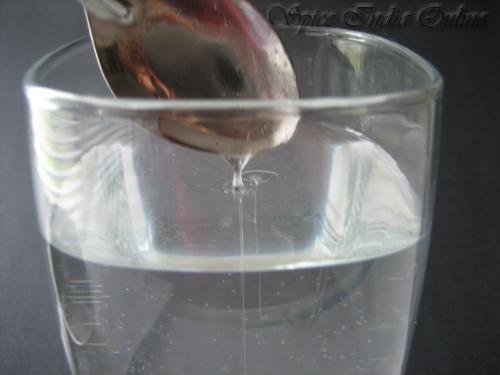
When the syrup forms a long sturdy line or string as shown, this will not melt as you drop, goes straight to the bottom and settle. This is one string or one thread consistency. When you roll this string between your thumb and index finger, it should form a non sticky sugar ball.

The second thread will be much bigger and firm that it stays like this in the water. When rolled between your finger will be very sticky.
Soaking the boondis

-
Once it reaches the desired stage, immediately switch off the flame and pour this sugar syrup over the boondis.
-
Single thread laddu – will take 3 to 4 hours to soak up all the syrup and will crystalize slowly.
-
Double thread laddu – will soak up in under 15 minutes and will crystalize at a faster pace.
Toppings

-
Heat ghee in a small pan, fry the broken cashews and raisins until golden, add the cloves, cardamom, edible camphor & melon seeds along with it and add it to the soaking boondis.
-
Mix well with a ladle or use your hands.
Shaping the laddus

-
Depending the string consistency and room temperature the boondis will absorb the syrup.
-
For single thread consistency syrup, the boondis will take few hours to drink up all the syrup. You may start shaping the laddus once the mixture cools a bit. You can shape these even after 4 hours and will never be hard to shape. The boondi mixture will have a soft feel and the syrup will ooze when pressed. These laddus will firm up more with time.
-
For Double thread consistency syrup, the boondis will drink up the syrup within 10 to 15 minutes of soaking. The crystallization happens faster and boondis will have a dry feel with sugary coating. Start shaping them into laddus once the its warm enough to touch. Do not rest them too long as it will be hard to shape them.

Possible fixes & storage
-
If the boondis turn too juicy or too dry… only fix is to pulse them in a mixer jar and then shape them into laddus. Boondi won’t look round but will still be tasty to eat.
-
Laddus stay good for 2 weeks at room temperature. Soft laddus has a short life compared to firm laddus.


Comments are closed.